
The cryptocurrency industry stands at a pivotal crossroads. While early adopters obsessed over consensus mechanisms, hash rates, and decentralization philosophies, the next wave of users will approach digital assets with entirely different expectations. Next Billion Crypto: They won’t study white papers or debate the merits of various blockchain protocols. Instead, they’ll simply want technology that works seamlessly, much like they use email without understanding SMTP protocols or stream videos without comprehending codecs.
This fundamental shift in user and an opportunity for the crypto ecosystem. The technology that once required deep technical knowledge to navigate must now become invisible, operating silently in the background while delivering tangible value to everyday users. The question isn’t whether this transformation will happen, but rather how quickly the industry can adapt to meet the demands of mainstream adoption.
Understanding this evolution is crucial for anyone invested in the future of digital currencies and decentralized systems. The billion users who will propel cryptocurrency into true mainstream acceptance won’t be motivated by ideological commitments to decentralization or fascination with cryptographic innovations. They’ll be drawn by practical benefits, intuitive interfaces, and solutions to real-world problems that traditional financial systems have failed to address.
The Evolution from Technical Complexity: Next Billion Crypto
The early days of blockchain technology demanded significant technical literacy from participants. Users needed to understand private keys, manage seed phrases, calculate gas fees, and navigate complex wallet interfaces. This high barrier to entry limited adoption to technologically savvy individuals and created an insular community that often communicated in impenetrable jargon.
Today’s successful digital platforms demonstrate a completely different approach. Consider how rideshare applications transformed transportation. Users don’t need to understand GPS technology, payment processing systems, or driver matching algorithms. They simply tap a button, and a car arrives. This elegant simplicity masks extraordinary technical complexity, but users never encounter that complexity directly.
The cryptocurrency industry must undergo a similar transformation. The next billion users will expect crypto wallets that function as smoothly as their favorite mobile apps. They’ll demand instant transactions without worrying about network congestion or transaction fees. Security measures must protect users without requiring them to become cryptography experts or memorize 24-word recovery phrases.
Several pioneering projects have already begun this shift toward abstraction. Account abstraction technologies are eliminating the need for users to manage private keys directly. Social recovery mechanisms allow trusted contacts to help restore access without compromising security. Gasless transactions remove the friction of acquiring native tokens before using decentralized applications. These innovations represent the foundation of truly user-friendly crypto adoption.
Why Mainstream Users Prioritize Benefits Over Technology
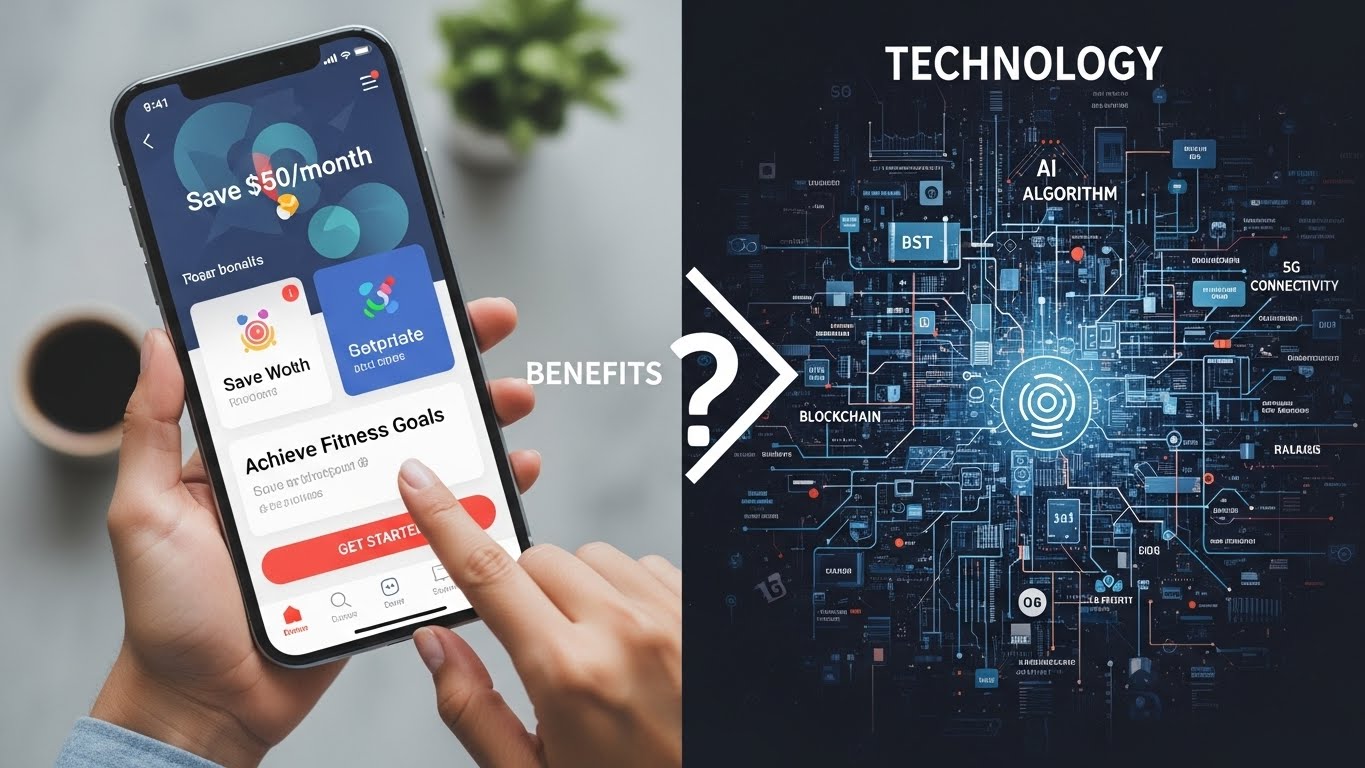
Average consumers make technology choices based on utility, not underlying architecture. Nobody chooses a smartphone based on its processor specifications or a streaming service based on its content delivery network. Users care about whether technology solves their problems, provides entertainment, or makes life more convenient.
The same principle applies to cryptocurrency adoption. Mainstream users won’t adopt digital assets because they find blockchain fascinating. They’ll adopt them because crypto offers tangible advantages over existing alternatives. This might mean faster international payments with lower fees, genuine ownership of digital assets, access to financial services without traditional banking requirements, or participation in creator economies that were previously inaccessible.
Research into consumer behavior consistently shows that people resist change unless new solutions offer significant improvements over familiar options. The next generation of crypto users won’t tolerate friction, complexity, or steep learning curves. They’ll expect onboarding processes as smooth as creating social media accounts and interfaces as intuitive as popular consumer applications.
This shift in focus from technology to outcomes requires a fundamental rethinking of how the crypto industry communicates its value proposition. Marketing that emphasizes technical specifications or decentralization principles will fail to resonate with mainstream audiences. Instead, successful projects will highlight practical benefits, share compelling use cases, and demonstrate clear advantages over traditional alternatives.
The Power of Invisible Infrastructure
The most transformative technologies eventually become invisible. Electricity revolutionized society, but consumers don’t think about power generation when charging their phones. The internet fundamentally changed human communication, yet most users never consider TCP/IP protocols when browsing websites. Blockchain technology is following the same trajectory toward invisibility.
This invisibility doesn’t diminish blockchain’s importance. Rather, it represents the technology’s maturation and successful integration into everyday life. When distributed ledger technology operates seamlessly behind user-friendly interfaces, it can finally deliver on its promise of reshaping finance, ownership, and digital interaction.
Several sectors are already demonstrating this principle in action. Gaming applications are integrating blockchain-based assets without requiring players to understand non-fungible tokens or smart contracts. Supply chain systems are using distributed ledgers to enhance transparency without expecting consumers to audit blockchain transactions. Payment platforms are leveraging cryptocurrency rails for international transfers while presenting familiar, conventional interfaces to users.
The financial technology industry has particularly embraced this approach. Modern fintech applications abstract away complex banking infrastructure, regulatory compliance, and payment networks behind simple, elegant interfaces. Users send money to friends, pay bills, or invest in stocks without understanding the intricate systems enabling these transactions. Crypto platforms must achieve the same level of abstraction to reach mainstream audiences.
Practical Use Cases That Drive Adoption
The next billion crypto users will be attracted by specific, practical applications rather than abstract technological possibilities. Understanding these use cases helps illuminate the path toward mass adoption and reveals where development efforts should focus.
Cross-border payments represent one of the most compelling use cases for everyday users. Traditional international transfers remain expensive, slow, and complicated. Cryptocurrency can enable near-instant transfers at a fraction of traditional costs, but only if the user experience matches the simplicity of domestic payment apps. Recipients shouldn’t need crypto knowledge to receive funds, and senders shouldn’t navigate complex exchanges or worry about volatility.
Digital ownership and creator economies offer another powerful driver for adoption. Musicians, artists, writers, and content creators increasingly seek direct relationships with audiences and fair compensation for their work. Blockchain technology can facilitate these connections, but creators and fans won’t adopt these systems if they require technical expertise. The technology must disappear, leaving only the value exchange between creators and supporters.
Financial inclusion remains a critical opportunity for cryptocurrency technology. Billions of people worldwide lack access to traditional banking services, facing barriers including documentation requirements, minimum balance restrictions, and geographic limitations. Digital currencies can provide these underserved populations with financial tools, but only through interfaces designed for users with limited technological experience and potentially intermittent internet connectivity.
Loyalty programs and digital rewards represent an often-overlooked application with massive potential. Traditional loyalty points are fragmented across countless brands, difficult to redeem, and impossible to transfer. Blockchain-based rewards could be interoperable, tradeable, and genuinely valuable, but consumers won’t engage with such systems if they require understanding token standards or managing cryptocurrency wallets.
The Role of Regulation in Simplifying User Experience
Regulatory clarity and consumer protections will play crucial roles in enabling mainstream crypto adoption. While the crypto community has historically viewed regulation skeptically, appropriate regulatory frameworks can actually accelerate adoption by increasing consumer confidence and reducing risks for everyday users.
Clear regulations provide certainty for businesses building user-friendly applications. Companies can invest in superior user experiences when they understand compliance requirements and legal boundaries. This clarity also attracts institutional capital and mainstream businesses that have avoided cryptocurrency due to regulatory uncertainty.
Consumer protection measures, when properly designed, make cryptocurrency safer and more accessible for ordinary users. Insurance for custodial wallets, fraud prevention systems, and dispute resolution mechanisms all reduce risks for users who lack the technical expertise to secure their own assets. The next billion users will expect these protections as standard features, not optional add-ons.
However, regulation must balance protection with innovation. Overly restrictive frameworks could stifle the experimentation and development necessary for creating truly user-friendly crypto experiences. The most effective regulatory approaches will focus on outcomes and consumer protections rather than prescriptive technical requirements, allowing continued innovation in how blockchain technology is implemented and abstracted.
Building for Simplicity Without Sacrificing Security
One of the greatest challenges facing cryptocurrency development is maintaining robust security while dramatically simplifying user experiences. Early crypto required users to shoulder enormous security responsibilities, but mainstream adoption demands systems that protect users without requiring expertise.
Multi-signature wallets, biometric authentication, and hardware security modules represent technological approaches to this challenge. These solutions can provide bank-grade security while presenting simple, familiar interfaces. Users might authenticate with fingerprints or face recognition, never realizing that complex cryptographic operations are securing their assets behind the scenes.
Social recovery mechanisms offer another promising avenue for balancing security and usability. Rather than forcing users to safeguard seed phrases perfectly or lose access forever, these systems allow trusted contacts to help restore accounts. This approach mimics familiar account recovery processes while maintaining strong security through distributed trust.
Insurance and custodial services will also play important roles for users who prefer not to manage their own security, even with improved tools. Just as most people use banks rather than keeping cash under mattresses, many crypto users will opt for custodial solutions that provide professional security management and regulatory protections. The key is offering choice and ensuring that both self-custody and custodial options deliver excellent user experiences.
The Importance of Education Without Technical Burden

While the next billion users won’t care about blockchain technology itself, they will need education about how to use cryptocurrency applications safely and effectively. This creates an interesting paradox: users need knowledge without needing to understand underlying technical complexity.
Effective crypto education for mainstream audiences focuses on practical skills and outcomes rather than technical details. Users should understand how to recognize legitimate applications, protect their accounts, avoid common scams, and use crypto products to achieve their goals. They don’t need to understand consensus mechanisms or cryptographic functions.
This approach mirrors education in other technological domains. Driver’s education teaches people to operate vehicles safely without requiring mechanical engineering knowledge. Computer literacy programs focus on using software effectively rather than explaining programming concepts. Cryptocurrency education should follow these proven models, emphasizing practical competence over technical comprehension.
Contextual education, delivered within applications at the moment users need information, proves particularly effective. Rather than requiring users to complete lengthy tutorials before using crypto products, successful applications provide just-in-time guidance as users encounter new features or concepts. This approach reduces friction while ensuring users have the necessary knowledge when it becomes relevant.
The Path Forward for Industry Development
The cryptocurrency industry must fundamentally reorient its priorities to serve the next billion users effectively. This transformation requires changes in development practices, business models, and community culture.
Development teams must prioritize user experience with the same intensity traditionally reserved for technical performance and security. This means investing in user research, interface design, and usability testing. Features should be evaluated not just on technical merit but on whether ordinary users can understand and benefit from them.
Business models must evolve beyond serving only crypto-native users. Sustainable crypto businesses will generate revenue from mainstream users who may never even realize they’re using blockchain technology. This might mean embedding crypto functionality within existing applications, offering hybrid services that bridge traditional and decentralized systems, or creating entirely new applications that leverage blockchain’s advantages while hiding its complexity.
Community culture must become more welcoming and less tribal. The technical gatekeeping and ideological purity tests that characterize some crypto communities will alienate mainstream users. Instead, successful projects will cultivate inclusive communities that value diverse perspectives and welcome users regardless of their technical background or level of engagement with decentralization principles.
Conclusion
The future of cryptocurrency lies not in converting the world to blockchain enthusiasts but in building applications so useful and intuitive that people adopt them without caring about the underlying technology. The next billion crypto users will interact with blockchain systems much as they currently use email, GPS, or cloud storage—benefiting from the technology without thinking about it.
This evolution from technical complexity to invisible infrastructure represents the natural maturation of transformative technologies. Just as the internet’s early command-line interfaces gave way to intuitive browsers and apps, blockchain must shed its technical burden to reach mainstream audiences. The projects and platforms that succeed in this new era will be those that obsess over user experience, focus relentlessly on practical benefits, and make the technology disappear.
The cryptocurrency industry stands at a defining moment. It can continue serving a relatively small community of technically sophisticated users, or it can embrace the challenging work of becoming truly accessible to everyone. The billion users waiting to discover crypto’s benefits won’t be patient with complexity or impressed by technical specifications. They’ll simply choose the solutions that work best for their needs, whether those solutions use blockchain technology or not. The industry’s task is ensuring that crypto-powered applications become the preferred solutions by making blockchain invisible, powerful, and indispensable.
FAQs
Q: Why won’t future crypto users care about blockchain technology?
Future cryptocurrency users will prioritize practical benefits and user experience over technical details, just as most people use smartphones, the internet, or email without understanding the underlying technology. Mainstream adoption requires that blockchain technology operate invisibly in the background, solving problems and delivering value without requiring users to understand consensus mechanisms, cryptographic protocols, or distributed ledger architecture. Success will come from applications that work seamlessly, not from converting users into blockchain enthusiasts.
Q: What are the biggest barriers preventing mainstream cryptocurrency adoption?
The primary barriers to mainstream crypto adoption include complex user interfaces, steep learning curves, security responsibilities that require technical knowledge, confusing terminology, and the need to understand technical concepts before using applications. Additionally, concerns about volatility, regulatory uncertainty, and the perception of cryptocurrency as primarily for speculation rather than practical use create hesitation among potential users. Overcoming these barriers requires fundamental changes in how crypto applications are designed and presented.
Q: How can cryptocurrency become as easy to use as traditional payment apps?
Cryptocurrency can achieve mainstream usability through several innovations, including account abstraction that eliminates private key management, social recovery mechanisms for lost access, gasless transactions that remove the need to acquire native tokens, integrated fiat on-ramps that allow direct purchases, familiar authentication methods like biometrics, and interfaces designed using proven user experience principles from successful consumer applications. The key is abstracting technical complexity while maintaining the benefits of blockchain technology.
Q: Will making blockchain invisible reduce its benefits or security?
Making blockchain technology invisible to users doesn’t reduce its benefits or security; it simply moves technical complexity behind user-friendly interfaces. The same cryptographic security, decentralization benefits, and transparency can be maintained while presenting simple, intuitive interfaces to users. This approach actually enhances security for mainstream users by reducing opportunities for human error and implementing sophisticated security measures that don’t require technical expertise to use effectively.
Q: What types of cryptocurrency applications will attract mainstream users?
Applications that solve real problems will attract mainstream users, including affordable international payments, creator monetization platforms, digital ownership systems, financial services for the unbanked, interoperable loyalty rewards, gaming economies with genuine asset ownership, and transparent supply chain tracking. These applications must deliver tangible benefits over existing alternatives while requiring no blockchain knowledge to use. Success will come from focusing on outcomes users care about rather than technical features that excite crypto enthusiasts.