LSEG Launches 24/7 Blockchain Settlement Revolution
London Stock Exchange Blockchain Settlement Revolution service, transforming traditional trading infrastructure with real-time capabilities.

London Stock Exchange Group (LSEG) unveils its revolutionary 24/7 blockchain settlement service, marking a decisive shift away from traditional trading infrastructure. Blockchain Settlement Revolution: This groundbreaking initiative represents more than just a technological upgrade; it signals the convergence of traditional finance and distributed ledger technology, promising to reshape how securities are traded, cleared, and settled across global markets.
For decades, financial markets have operated within the confines of business hours, settlement delays, and intermediary-dependent processes. The introduction of round-the-clock blockchain settlement by one of the world’s most prestigious financial institutions challenges these conventions, offering market participants unprecedented access, efficiency, and transparency. As institutional investors increasingly demand faster execution and settlement times, LSEG’s bold move positions the exchange at the forefront of financial innovation, potentially setting a new standard for exchanges worldwide.
The Blockchain Settlement Revolution
The concept of blockchain settlement fundamentally reimagines how financial transactions are processed and finalized. Unlike conventional settlement systems that require multiple days to complete trades through various intermediaries, blockchain technology enables near-instantaneous verification and settlement through a distributed network of computers. This eliminates many of the inefficiencies, risks, and costs associated with traditional clearing and settlement processes.
LSEG’s new service leverages distributed ledger technology to create an immutable record of all transactions, ensuring transparency and security while dramatically reducing settlement times from the standard T+2 (trade date plus two days) to potentially minutes or even seconds. The always-on nature of this system means that trades can be executed and settled any time, day or night, weekend or holiday, breaking free from the constraints that have defined financial markets for generations.
The significance of this development extends beyond mere convenience. Faster settlement times reduce counterparty risk, lower capital requirements, and free up liquidity that would otherwise be locked during the settlement period. For institutional investors managing billions in assets, these improvements translate into substantial operational efficiencies and cost savings.
The Architecture Behind LSEG’s Blockchain Platform
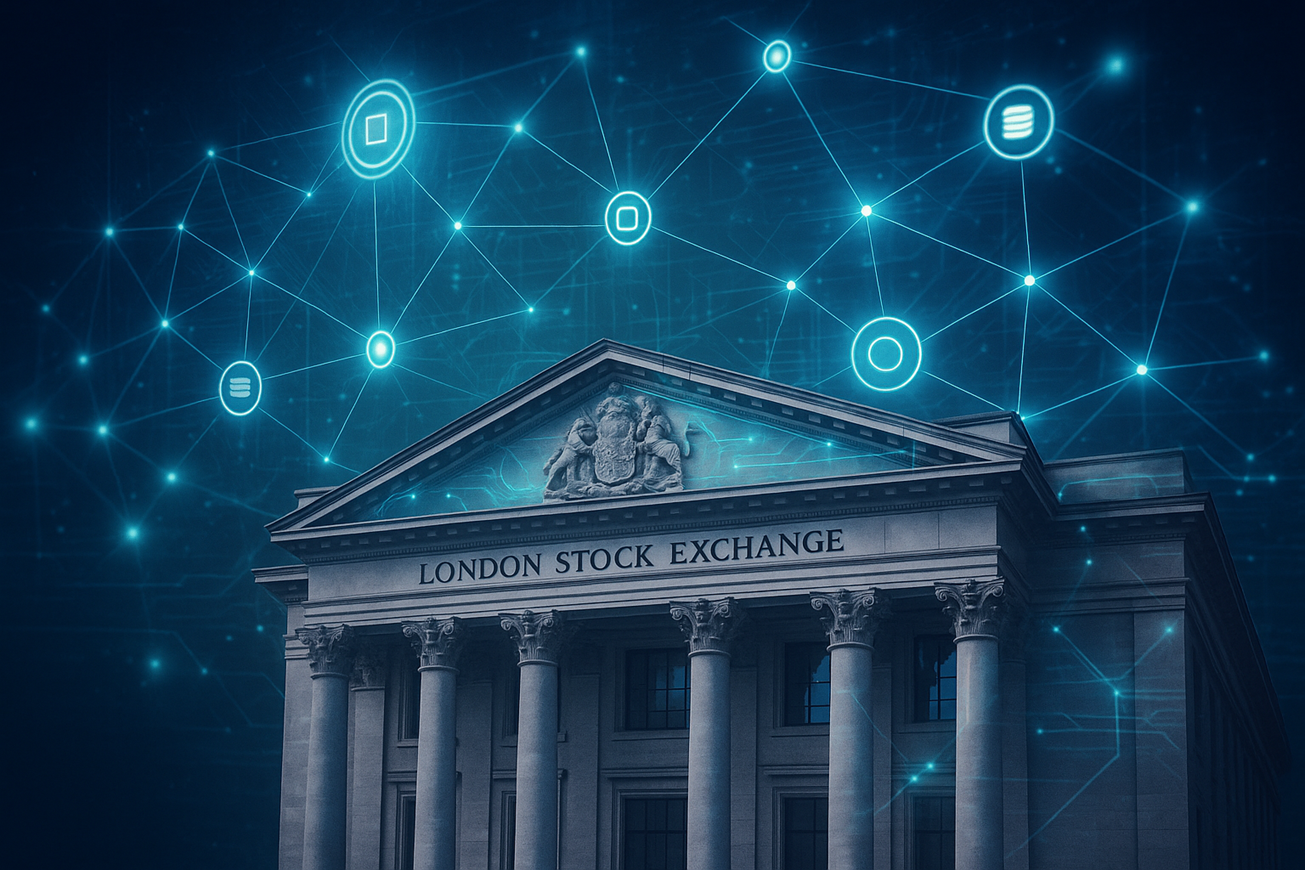
The London Stock Exchange Group has engineered its blockchain settlement service with institutional-grade security and scalability as paramount considerations. The platform utilizes a permissioned blockchain network, which differs from public blockchains like Bitcoin or Ethereum by restricting access to verified participants. This approach maintains the benefits of distributed ledger technology while ensuring regulatory compliance and transaction privacy.
At its core, the system employs smart contracts—self-executing agreements with terms directly written into code—to automate the settlement process. When a trade is executed, the smart contract automatically verifies that both parties have the necessary assets and authority to complete the transaction, then instantaneously transfers ownership without requiring manual intervention or third-party verification.
The infrastructure supporting this 24/7 settlement service includes redundant nodes distributed across multiple geographic locations, ensuring continuous availability and resilience against potential disruptions. The platform also incorporates advanced cryptographic techniques to secure transaction data while maintaining the audit trails required by financial regulators. This combination of innovation and prudence reflects LSEG’s commitment to balancing technological advancement with the stability and security demanded by institutional clients.
Impact on Market Participants: Blockchain Settlement Revolution
The introduction of continuous blockchain settlement fundamentally alters the landscape for various market participants, from retail investors to hedge funds and institutional asset managers. For retail investors, the ability to access markets and settle trades outside traditional trading hours opens new opportunities for responding to global events and managing portfolios with greater flexibility. A significant announcement from an Asian company, for example, could be acted upon immediately rather than waiting for London markets to open.
Institutional investors stand to gain even more substantially from this transformation. The reduction in settlement times directly impacts capital efficiency, allowing firms to redeploy funds more quickly and reduce the margin requirements associated with unsettled trades. This enhanced liquidity enables more dynamic portfolio management and potentially improves returns by minimizing the drag of capital sitting idle during settlement periods.
Market makers and broker-dealers benefit from reduced operational risk and lower costs associated with maintaining settlement infrastructure. The automation inherent in blockchain settlement minimizes the manual reconciliation processes that have historically consumed significant resources and introduced opportunities for errors. This efficiency gain can be passed along to clients through tighter spreads and lower transaction costs.
Regulatory Considerations and Compliance Framework
Implementing a blockchain settlement system within the highly regulated environment of financial markets presents complex challenges that LSEG has methodically addressed. The exchange has worked closely with the Financial Conduct Authority (FCA) and other regulatory bodies to ensure the new platform meets all statutory requirements while pushing the boundaries of what’s technologically possible.
One critical aspect involves maintaining comprehensive audit trails and reporting capabilities. Despite the automated nature of blockchain transactions, regulators require detailed records of all trading activity for surveillance and enforcement purposes. LSEG’s system incorporates sophisticated monitoring tools that provide real-time visibility into all transactions while preserving the privacy of commercial information.
The platform also addresses anti-money laundering (AML) and know-your-customer (KYC) requirements through integrated identity verification systems. All participants must undergo rigorous vetting before gaining access to the network, and their activities are continuously monitored for suspicious patterns. This layered approach to compliance ensures that the benefits of blockchain technology don’t come at the expense of market integrity or regulatory oversight.
Furthermore, the distributed ledger technology employed by LSEG maintains compatibility with existing regulatory reporting standards, enabling seamless integration with regulatory information systems. This forward-thinking design anticipates potential future regulatory requirements while satisfying current obligations.
Technical Challenges and Solutions
Deploying a robust 24/7 blockchain settlement service capable of handling institutional-scale transaction volumes requires overcoming significant technical hurdles. Traditional blockchain networks often face scalability limitations, with transaction throughput measured in dozens or hundreds of transactions per second. LSEG needed a solution capable of processing thousands of trades simultaneously during peak periods while maintaining sub-second latency.
The exchange addressed these challenges through several innovative approaches. First, the platform utilizes a hybrid architecture that combines on-chain settlement for final ownership transfers with off-chain processing for order matching and pre-settlement verification. This design maximizes throughput while ensuring that the immutable blockchain record captures all completed transactions.
Second, LSEG implemented advanced consensus mechanisms optimized for permissioned networks. Unlike public blockchains that require energy-intensive proof-of-work algorithms, the exchange’s platform uses more efficient consensus protocols that leverage the trusted relationships among network participants. This approach dramatically increases transaction speed while maintaining security and decentralization benefits.
The system also incorporates sophisticated load balancing and failover mechanisms to ensure continuous availability. Transactions are automatically routed to available nodes, and if any component experiences issues, traffic seamlessly shifts to backup systems without service interruption. This enterprise-grade reliability is essential for institutional clients who depend on consistent market access.
Global Implications and Competitive Landscape
The London Stock Exchange Group’s move into blockchain settlement doesn’t exist in isolation; it represents part of a broader transformation sweeping through global financial infrastructure. Exchanges and financial institutions worldwide are exploring or implementing similar technologies, creating both collaborative opportunities and competitive pressures.
Several major exchanges, including those in Singapore, Switzerland, and Australia, have announced or launched blockchain-based trading and settlement initiatives. This parallel development suggests an industry-wide recognition that distributed ledger technology will become fundamental to future market infrastructure. LSEG’s comprehensive implementation, however, positions it as a potential leader in this transition, particularly given London’s historical role as a global financial center.
The competitive implications extend beyond traditional exchanges. Technology companies and fintech startups are building alternative trading platforms leveraging blockchain, potentially disrupting established market structures. By proactively embracing this technology, LSEG demonstrates its intent to remain relevant and competitive in an evolving landscape where technology and finance become increasingly intertwined.
Internationally, the success of LSEG’s blockchain settlement service could influence regulatory approaches in other jurisdictions, potentially accelerating the adoption of similar systems globally. As more markets implement 24/7 settlement capabilities, the pressure on remaining traditional systems to modernize will intensify, potentially creating a network effect that transforms global trading infrastructure within the coming decade.
Economic Benefits and Cost Structures

The economic case for blockchain-based settlement extends beyond operational efficiency to encompass substantial cost reductions across the financial ecosystem. Traditional settlement infrastructure involves numerous intermediaries—clearinghouses, custodians, transfer agents—each adding layers of cost and complexity. By consolidating these functions into automated smart contracts operating on a distributed ledger, LSEG’s platform eliminates much of this overhead.
Initial estimates suggest that widespread adoption of blockchain settlement could reduce post-trade costs by 50% or more across the industry. These savings derive from several sources: reduced manual processing, lower capital requirements due to faster settlement, decreased reconciliation expenses, and minimized error correction costs. For large institutional participants executing millions of trades annually, these efficiencies translate into significant bottom-line improvements.
The 24/7 availability of the platform also generates economic value by enabling continuous market access. Investors can respond immediately to global events rather than waiting for market opens, potentially capturing opportunities that would otherwise be missed. This enhanced market efficiency should improve price discovery and liquidity, benefiting all participants.
However, the transition to blockchain infrastructure requires substantial upfront investment. LSEG has committed significant resources to developing the platform, and participants must invest in necessary technology upgrades and staff training. The long-term economic benefits are expected to far outweigh these initial costs, but the transition period presents financial challenges, particularly for smaller market participants.
Future Developments and Road Ahead
The launch of LSEG’s blockchain settlement service represents a beginning rather than an endpoint in the evolution of market infrastructure. The exchange has outlined an ambitious roadmap for expanding capabilities and integrating additional asset classes over time. Initially focused on equities, the platform will likely extend to bonds, derivatives, and potentially even alternative assets like tokenized real estate or commodities.
Interoperability with other blockchain networks represents another frontier for development. As multiple exchanges and financial institutions deploy blockchain systems, the ability to seamlessly transfer assets across platforms becomes increasingly important. LSEG is actively participating in industry initiatives to establish common standards and protocols that will enable this cross-platform functionality.
The integration of artificial intelligence and machine learning with blockchain settlement also holds significant promise. These technologies could enhance fraud detection, optimize trade execution, and provide predictive analytics that help participants make more informed decisions. The combination of blockchain’s transparency and AI’s analytical capabilities could unlock entirely new approaches to risk management and market surveillance.
Looking further ahead, the success of blockchain settlement in traditional securities markets could pave the way for entirely new types of financial instruments and trading mechanisms. Tokenized assets, fractional ownership of high-value items, and programmable securities with embedded business logic all become more feasible in a blockchain-native infrastructure.
Conclusion
The London Stock Exchange Group’s launch of its 24/7 blockchain settlement service marks a watershed moment in financial market evolution. By embracing distributed ledger technology and reimagining fundamental market infrastructure, LSEG has positioned itself at the vanguard of an industry-wide transformation. The platform’s ability to provide continuous, near-instantaneous settlement addresses longstanding inefficiencies while opening new possibilities for market participants worldwide.
This initiative demonstrates that traditional financial institutions can successfully adopt and integrate emerging technologies without compromising the security, reliability, and regulatory compliance that institutional clients demand. As the platform matures and expands, its influence will likely extend far beyond London, potentially reshaping global trading infrastructure and setting new standards for how financial markets operate in the digital age.
The journey toward fully blockchain-enabled financial markets remains in its early stages, with numerous technical, regulatory, and operational challenges still to address. However, LSEG’s bold move provides compelling proof of concept, demonstrating that the benefits of blockchain settlement are not merely theoretical but practically achievable. For investors, institutions, and the broader financial ecosystem, this development heralds a future characterized by greater efficiency, transparency, and accessibility—a future where markets truly never sleep.
FAQs
Q: What makes LSEG’s blockchain settlement service different from traditional settlement systems?
The fundamental difference lies in the speed, transparency, and automation that blockchain technology enables. Traditional settlement systems typically require two business days to complete trades, involve multiple intermediaries, and operate only during business hours. LSEG’s blockchain settlement service settles trades in near real-time, operates 24/7, including weekends and holidays, and uses automated smart contracts to eliminate many intermediaries. This reduces counterparty risk, lowers capital requirements, and provides participants with immediate access to settled assets, significantly improving operational efficiency and liquidity management.
Q: How does LSEG ensure security and regulatory compliance on its blockchain platform?
LSEG employs a permissioned blockchain network where all participants undergo rigorous identity verification before gaining access. The platform uses advanced cryptographic techniques to secure transactions while maintaining comprehensive audit trails required by regulators. The exchange has worked closely with the Financial Conduct Authority to ensure the system meets all regulatory requirements, including anti-money laundering provisions and market surveillance capabilities. Multiple redundant nodes distributed geographically ensure system resilience, while sophisticated monitoring tools provide real-time oversight of all trading activity to detect and prevent suspicious transactions.
Q: Can retail investors access LSEG’s 24/7 blockchain settlement service?
While the initial implementation targets institutional participants, retail investors will ultimately benefit from this infrastructure through their brokers and investment platforms. As the technology matures and more market participants connect to the system, retail investors should gain access to extended trading hours and faster settlement times. However, direct access to the blockchain network itself remains restricted to verified institutional participants to maintain security and regulatory compliance. Retail investors interested in utilizing these capabilities should consult with their brokers about when these features will become available through their existing trading accounts.
Q: What types of assets can currently be traded and settled on LSEG’s blockchain platform?
The initial launch focuses primarily on equity securities listed on the London Stock Exchange, providing a foundation for the technology before expanding to additional asset classes. LSEG has indicated plans to extend the platform to fixed income securities, derivatives, and potentially other financial instruments over time. The phased approach allows the exchange to refine the technology, address any operational challenges, and ensure regulatory compliance for each asset class before broader implementation. The ultimate goal is creating a comprehensive blockchain-based infrastructure capable of handling virtually all types of tradable financial instruments.
Q: How will LSEG’s blockchain initiative affect global financial markets beyond London?
LSEG’s implementation of blockchain settlement has significant implications for global financial infrastructure. As one of the world’s leading exchanges adopts this technology, it establishes a precedent that other exchanges and financial institutions are likely to follow. The success of this platform could accelerate blockchain adoption across international markets, potentially leading to standardized protocols for cross-border trading and settlement. This could dramatically reduce the friction and costs associated with international securities transactions, improve global market liquidity, and enable truly 24/7 worldwide market access. Additionally, the competitive pressure created by LSEG’s innovation may drive other exchanges to modernize their infrastructure more quickly than previously planned.