Web 3.0 Explained The Future of Decentralized Internet
Web 3.0 Explained The Future technology is revolutionizing the internet through decentralization, data ownership, and trustless systems.
Web 3.0, often called Web3. This next iteration of the internet promises to fundamentally reshape how we interact online, shifting power from centralized corporations back to individual users through blockchain technology and decentralized systems.
But what exactly is Web 3.0, and why is it generating such excitement among technologists, investors, and everyday internet users? At its core, Web3 decentralized internet represents a vision of the internet where users own their data, control their digital identities, and participate in online ecosystems without relying on intermediary platforms. Web 3.0 Explained The FutureUnlike the current web, which concentrates power in the hands of tech giants like Google, Facebook, and Amazon, the decentralized internet distributes control across networks of users, creating a more democratic and transparent digital landscape.
This comprehensive guide explores the foundations of Web 3.0, examining how it differs from previous internet generations, the technologies powering this revolution, and what this transformation means for the future of our digital lives. Whether you’re a curious beginner or someone looking to deepen your understanding of blockchain-based systems, this article will illuminate the path toward a more open and user-centric internet.
The Evolution from Web 1.0 to Web 3.0
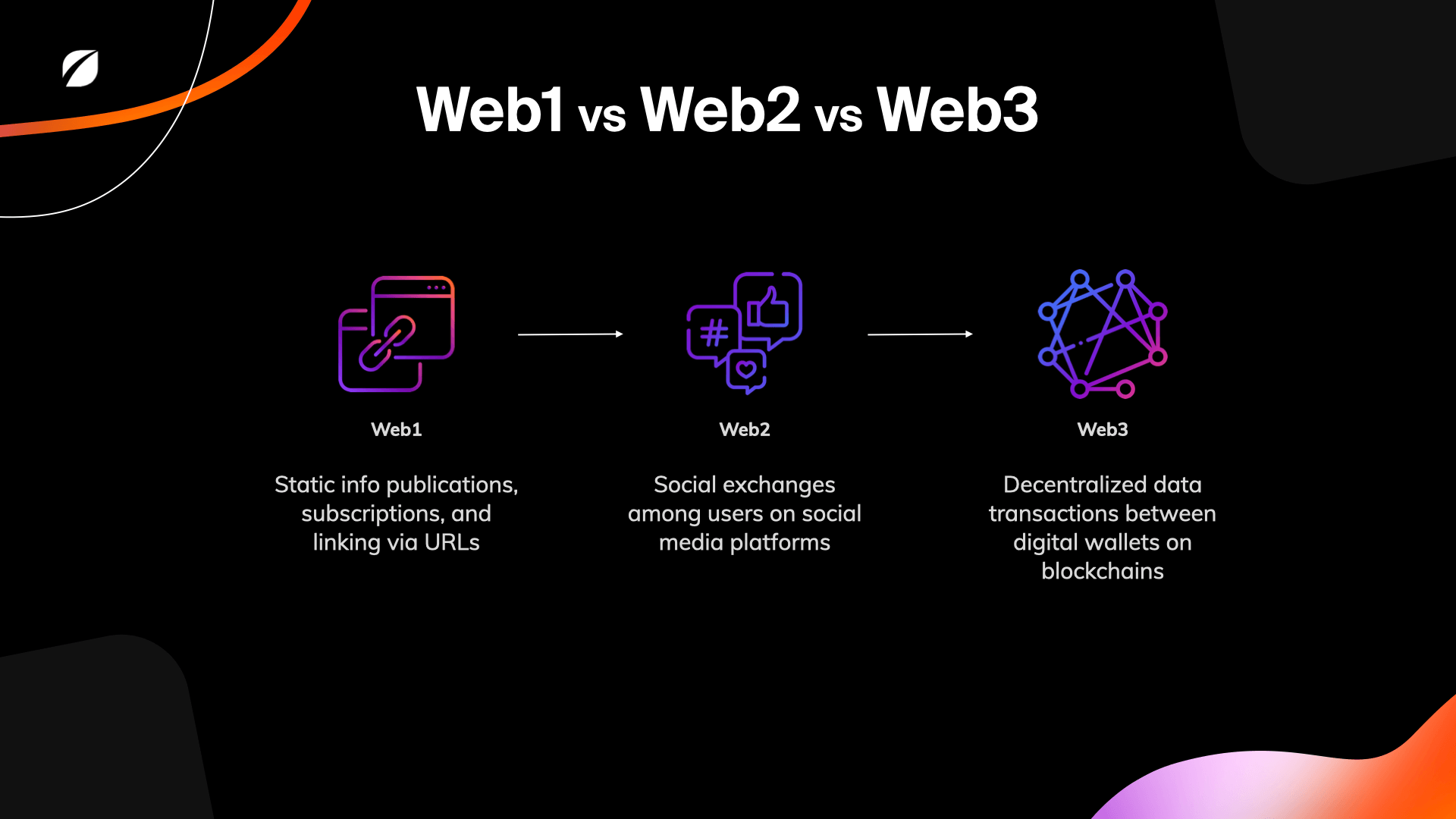
To truly appreciate the significance of Web 3.0, we must first understand the journey the internet has taken to reach this point. The evolution of the web can be divided into three distinct phases, each characterized by unique features and capabilities.
Web 1.0: The Read-Only Internet
The first generation of the internet, spanning roughly from 1991 to 2004, consisted primarily of static websites where content creators published information and users simply consumed it. This read-only web featured basic HTML pages with limited interactivity. Users could access information but had minimal ability to contribute, comment, or create their own content. Websites during this era functioned more like digital brochures or online encyclopedias, offering one-way communication from content publishers to passive audiences.
Web 2.0: The Read-Write Internet
The emergence of Web 2.0 around 2004 introduced the participatory web we know today. Platforms like Facebook, YouTube, Twitter, and Wikipedia transformed users from passive consumers into active content creators. This read-write internet enabled social networking, user-generated content, cloud computing, and mobile applications that made the web more interactive and accessible.
However, this convenience came with significant trade-offs. Users surrendered control of their personal data to centralized platforms, which monetized this information through targeted advertising. These tech giants became gatekeepers of the internet, controlling what content gets seen, how data is used, and who can participate in digital economies. Issues of privacy violations, data breaches, censorship, and platform monopolies have plagued Web 2.0, creating demand for a better alternative.
Web 3.0: The Read-Write-Own Internet: Web 3.0 Explained The Future
Web 3.0 introduces the concept of ownership to the internet equation. Built on blockchain technology and decentralized networks, Web3 enables users to not only read and write content but also own their digital assets, data, and online identities. This paradigm shift removes intermediaries, allowing peer-to-peer interactions through smart contracts and distributed ledgers.
The decentralized web operates on principles of transparency, security, and user sovereignty. Instead of trusting corporations to manage your data and digital rights, Web 3.0 employs cryptographic verification and consensus mechanisms to ensure authenticity and security without centralized control.
Core Technologies Powering Web 3.0
The transformation toward a decentralized internet relies on several foundational technologies that work together to create trustless, transparent, and permissionless systems.
Blockchain and Distributed Ledger Technology
At the heart of Web3 lies blockchain technology, a distributed database that records transactions across multiple computers simultaneously. Unlike traditional databases controlled by single entities, blockchains distribute information across networks of nodes, making data tampering virtually impossible and eliminating single points of failure.
Each block in the chain contains transaction data, timestamps, and cryptographic links to previous blocks, creating an immutable record of all activities. This transparency and security enable new forms of digital trust without requiring intermediaries like banks, payment processors, or platform administrators.
Cryptocurrency and Digital Assets
Cryptocurrencies serve as the native currencies of Web 3.0, enabling value transfer without traditional financial institutions. Bitcoin pioneered this concept, while Ethereum expanded possibilities by introducing programmable money through smart contracts. These digital currencies facilitate seamless transactions across borders, reduce fees, and provide financial access to unbanked populations.
Beyond currencies, Web3 introduces various digital assets, including non-fungible tokens (NFTs), which represent unique ownership of digital or physical items. These tokens enable new creator economies where artists, musicians, and content creators can monetize their work directly without platform intermediaries taking substantial cuts.
Smart Contracts and Decentralized Applications
Smart contracts are self-executing agreements with terms written directly into code. These programs automatically enforce and execute contract conditions when predetermined criteria are met, eliminating needs for lawyers, escrow services, or other middlemen. Ethereum popularized smart contracts, but many blockchain platforms now support this functionality.
Developers build decentralized applications (dApps) using smart contracts, creating services ranging from financial platforms to social networks that operate without central servers or controlling entities. These applications run on peer-to-peer networks, ensuring no single party can shut them down, censor content, or manipulate data.
Decentralized Storage and Computing
Traditional web applications rely on centralized servers owned by hosting companies. Web 3.0 distributes data storage across networks using protocols like IPFS (InterPlanetary File System) and Filecoin. Users contribute storage space to networks in exchange for cryptocurrency rewards, creating marketplaces for data storage without relying on companies like Amazon Web Services or Google Cloud.
Similarly, decentralized computing networks allow users to rent out unused processing power, creating distributed supercomputers that anyone can access. These systems make computing resources more affordable and accessible while reducing dependence on tech monopolies.
Key Features and Benefits of Web 3.0
The transition to a decentralized internet brings numerous advantages that address many shortcomings of the current web infrastructure.
Data Ownership and Privacy
In Web 2.0, platforms collect, store, and profit from user data, often without explicit consent or fair compensation. Web3 fundamentally changes this dynamic by giving users complete ownership of their information. Through cryptographic keys and decentralized identities, individuals control what data they share, who can access it, and how it’s used.
This shift addresses growing concerns about data privacy and surveillance capitalism. Users no longer need to trust corporations to protect their information because they hold the keys to their digital lives. This paradigm empowers individuals while reducing incentives for massive data breaches that have become commonplace.
Censorship Resistance
Centralized platforms can remove content, ban users, or manipulate information feeds based on corporate policies or government pressure. Decentralized networks distribute control across many participants, making censorship extremely difficult. Content stored on blockchains or distributed networks cannot be easily deleted or suppressed by any single authority.
This censorship resistance proves particularly valuable for journalists, activists, and citizens in authoritarian regimes where free expression faces threats. However, it also raises important questions about content moderation and addressing genuinely harmful material in decentralized systems.
Trustless and Permissionless Systems
Web 3.0 eliminates the need to trust intermediaries by replacing them with transparent, verifiable code. Smart contracts execute exactly as programmed, without requiring faith in human actors or institutions. Anyone can verify blockchain transactions, ensuring accountability and reducing fraud.
These systems are also permissionless, meaning anyone with internet access can participate without approval from gatekeepers. You don’t need a bank’s permission to hold cryptocurrency or a platform’s approval to build a decentralized application. This openness fosters innovation and provides opportunities for people excluded from traditional systems.
Interoperability and Composability
Unlike the walled gardens of Web 2.0 where platforms trap users in closed ecosystems, Web3 protocols emphasize interoperability. Decentralized applications can seamlessly interact, allowing developers to build on existing code and combine different services like digital building blocks.
This composability accelerates innovation as developers create new applications by connecting various protocols and smart contracts. Your digital identity, assets, and data can move freely between platforms, eliminating lock-in effects that currently plague the internet.
Challenges and Criticisms of Web 3.0
Despite its promise, the decentralized internet faces significant obstacles that must be addressed for widespread adoption.
Scalability and Performance Issues
Current blockchain networks process transactions much more slowly than centralized systems. Bitcoin handles about seven transactions per second, while Ethereum manages roughly 15 to 30. In contrast, Visa processes thousands per second. This scalability limitation creates network congestion and high transaction fees during peak usage.
Developers are working on solutions including layer-2 scaling, sharding, and alternative consensus mechanisms. However, achieving both decentralization and high performance remains a fundamental technical challenge requiring continued innovation.
User Experience Complexity
Web 3.0 applications often require users to manage cryptographic keys, understand blockchain concepts, and navigate complex interfaces. Losing access to your private keys means permanently losing your assets, creating high stakes that intimidate mainstream users accustomed to password recovery and customer support.
Improving user experience while maintaining security and decentralization represents a critical hurdle. Projects are developing more intuitive interfaces and abstraction layers that hide complexity, but significant work remains before Web3 becomes as accessible as current web applications.
Energy Consumption Concerns
Proof-of-work blockchains like Bitcoin consume enormous amounts of electricity, raising environmental concerns. Critics argue that Web 3.0 technologies exacerbate climate change through their energy demands. While many networks are transitioning to more efficient proof-of-stake systems, energy usage remains a legitimate criticism requiring ongoing attention.
Regulatory Uncertainty
Governments worldwide struggle to regulate cryptocurrencies and decentralized systems that don’t fit neatly into existing legal frameworks. This regulatory ambiguity creates risks for users and developers while potentially stifling innovation. Finding an appropriate balance between protecting consumers and preserving Web3’s permissionless nature poses significant policy challenges.
Real-World Applications of Web 3.0
The decentralized web is already enabling innovative applications across various sectors, demonstrating practical utility beyond speculation.
Decentralized Finance (DeFi)
Decentralized finance recreates traditional financial services like lending, borrowing, trading, and insurance using smart contracts instead of banks and brokers. Users can earn interest on cryptocurrency holdings, take out loans without credit checks, or trade assets directly with others through automated market makers.
DeFi platforms have locked billions of dollars in value, providing financial services to people excluded from traditional banking while offering yields and opportunities unavailable in conventional markets. This sector exemplifies how Web 3.0 can disintermediate entire industries.
Creator Economy and NFTs
Non-fungible tokens enable artists, musicians, writers, and content creators to sell their work directly to fans while maintaining royalty rights. Every subsequent sale can automatically compensate the original creator through smart contracts, creating ongoing revenue streams impossible in traditional markets.
Beyond art, NFTs represent ownership of virtual real estate, gaming items, event tickets, and intellectual property. This technology empowers creators to build sustainable careers without depending on platforms that extract substantial fees or control their relationship with audiences.
Decentralized Social Media
Projects like Mastodon, Lens Protocol, and Farcaster are building social networks where users own their content and connections. Unlike centralized platforms that can arbitrarily ban users or manipulate feeds, decentralized social media gives individuals control over their online presence and data.
These platforms allow users to take their social graphs between services, ending platform lock-in. Content creators can also directly monetize their work and relationships without platforms capturing most of the value.
The Future of Web 3.0
The decentralized internet remains in its early stages, comparable to where the internet stood in the mid-1990s. While current implementations face challenges, the trajectory points toward increasing adoption and maturation.
Mainstream companies are beginning to explore Web3 integration, from banks offering cryptocurrency services to brands creating NFT experiences. As technologies improve, user experiences simplify, and regulatory frameworks develop, barriers to adoption will gradually decrease.
The ultimate vision of Web 3.0 extends beyond technology to philosophical principles about digital rights, ownership, and governance. It represents an opportunity to rebuild the internet according to the values of transparency, user empowerment, and equitable value distribution. Whether this vision fully materializes depends on continued innovation, thoughtful regulation, and community commitment to these ideals.
Conclusion
Web 3.0 represents a fundamental reimagining of how the internet operates, shifting power from centralized corporations to individual users through blockchain technology and decentralized networks. This decentralized internet promises greater data ownership, privacy, censorship resistance, and opportunities for value creation without intermediaries.
While challenges around scalability, user experience, energy consumption, and regulation persist, the potential benefits of Web3 justify continued development and experimentation. The technologies powering this transformation—blockchain, cryptocurrency, smart contracts, and decentralized storage—are evolving rapidly, gradually addressing current limitations.
As we transition from the read-write web to the read-write-own internet, individuals gain unprecedented control over their digital lives. Whether Web 3.0 fully delivers on its ambitious promises remains to be seen, but the movement has already sparked important conversations about digital rights, platform power, and the kind of internet we want for future generations. Understanding these developments equips you to participate in shaping this next chapter of internet history.
FAQs
Q: Is Web 3.0 the same as the Semantic Web?
No, though the term “Web 3.0” was originally coined to describe the Semantic Web—an internet where machines can understand and process information like humans. Today, Web 3.0 primarily refers to the decentralized internet built on blockchain technology.
Q: Do I need cryptocurrency to use Web 3.0?
Currently, most Web 3.0 applications require cryptocurrency for transactions, paying network fees, or accessing services. However, developers are creating abstraction layers that hide these requirements from users. Future Web3 applications may seamlessly handle cryptocurrency conversions in the background, allowing people to use decentralized services without directly managing digital assets.
Q: Can Web 3.0 completely replace Web 2.0?
Complete replacement seems unlikely in the near term. More probably, Web 3.0 and Web 2.0 will coexist, with decentralized technologies gradually integrating into existing platforms. Some applications benefit greatly from decentralization, while others function perfectly well with centralized architectures.
Q: How does Web 3.0 protect my privacy better than current websites?
Web 3.0 uses cryptographic keys and decentralized identities, giving you control over what information you share. Instead of platforms collecting and storing your data on central servers vulnerable to breaches, you hold your information and grant temporary access as needed.
Q: What skills do I need to participate in Web 3.0 development?
Developers entering Web3 benefit from learning blockchain fundamentals, smart contract languages like Solidity, and understanding decentralized architecture patterns. However, traditional web development skills remain valuable as most decentralized applications still need frontend interfaces and user experiences. Non-developers can participate by learning about cryptocurrency wallets, decentralized finance, and engaging with Web3 communities.